
Expect spoilers.
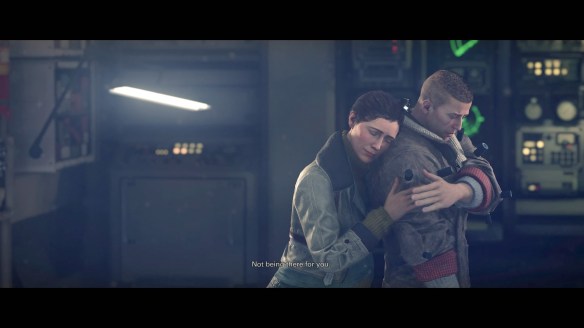
Wolfenstein 2: The New Colossus is about the ultimate fragility of two types of bodies that underpin Western values: the male adult and the liberal state. Each is a conceptual object that we expect to function perfectly—right up to the moment that they break down completely when confronted with something they were never built to deal with. The New Colossus is interested in what it would take for either of these to fall apart.
William “BJ” Blazkowicz is the quintessential videogame protagonist: a large, rectangular slab of white man-meat whose very shape belies how he has been a part of videogames since his flesh was square pixels. In the previous game, The New Order, he was an unstoppable hero—right until he was stopped, at the end of the game, by a lone grenade. That game saw this relic of the past of both his own world and videogames, revived after 20 years in a coma, left behind for dead. But sequels do what sequels do, and BJ was rescued, if not salvaged. When The New Colossus starts, his body is still destroyed. The opening stage has you pushing BJ’s heavy body through the level in a wheelchair, shooting Nazi’s with one hand while the other is on the wheel. Stairs are inaccessible and when the wheelchair inevitably gets tipped over, BJ is helpless. For a significant portion of the game, you are stuck with 50 health, instead of the typical 100, in levels that feel like they were balanced for a character with 100. It’s frustrating. It feels like it shouldn’t be this hard. It’s the frustration of a perfect, white male body encountering something unfair that is just a typical day for anyone forced to live in this society with any other form of body. Continue reading
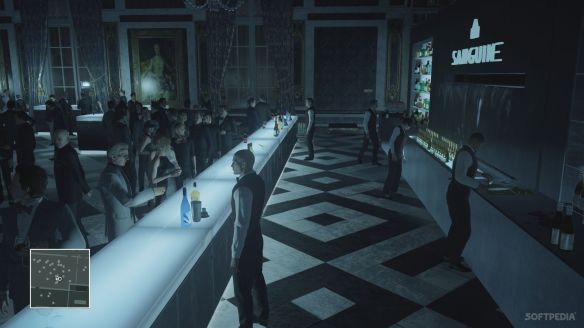 The superpower of the protagonist of most challenge-oriented videogames is time travel. Through the loops of failure and dressage that conventional videogame design depends on, the player fails at a task again and again until they have memorised how to proceed through the events that, on the current playthough, have not actually happened yet. This might be a muscle memory, ingraining in your hands the exact rhythm of movements required for a Rock Band track or a Super Meat Boy level. Or it might be a more traditional memory of remembering placements and patterns: the trap door full of monsters you could not have predicted in Doom kills you once and then, on the next attempt, you’re ready for it. Instead of dying you get a glimpse at what is about to happen. You remember what hasn’t happened yet.
 Brendan Keogh
You must be logged in to post a comment.